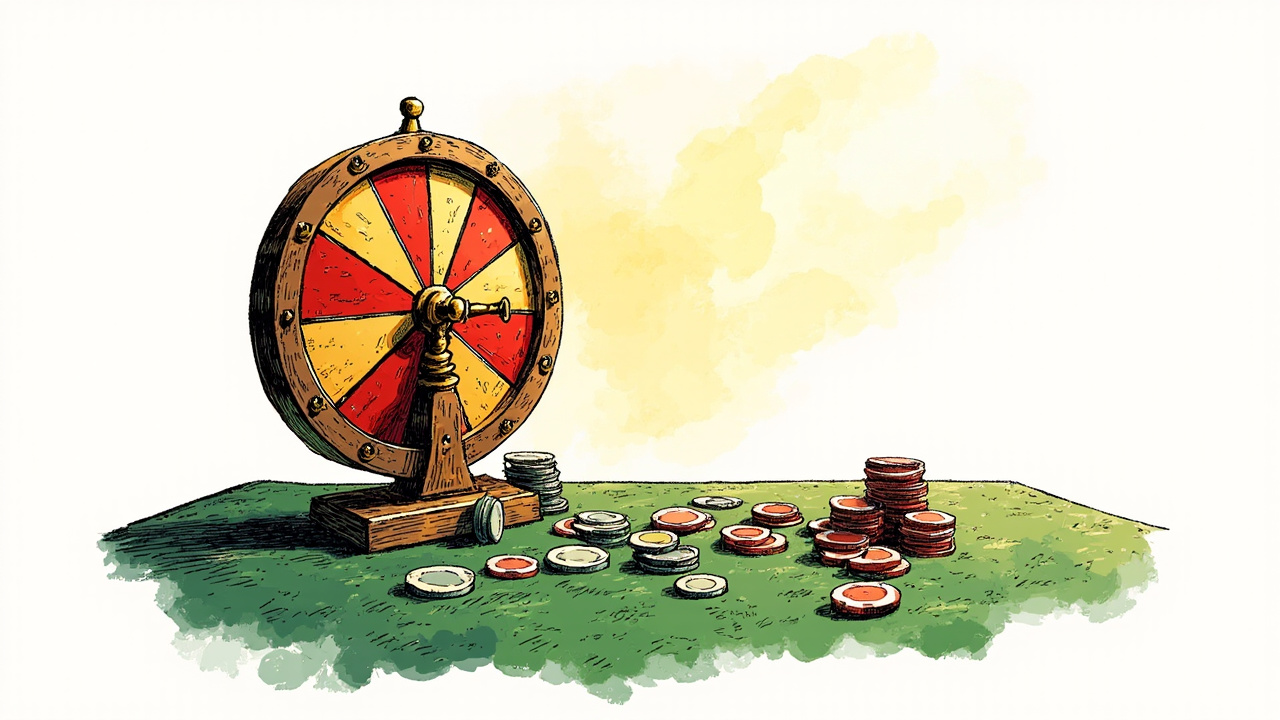
Linda Coorey has spent twenty-five years inside gaming operations and three decades shaping creative products across slots, online platforms and live dealer builds, so when she sizes up a live casino money wheel game she looks past the flashing lights and asks what the table actually rewards. I caught up with her on a quiet Gold Coast arvo to talk through how punters should read the wheel before they drop a chip, because the spin looks simple until you start counting the house edge on every segment. The conversation stayed grounded in what a player can verify, not what a flashy lobby promises, and that mindset shapes the whole guide below.
Choosing the right table starts with reading the segment mix and the payout rhythm instead of chasing a lucky colour. A live casino money wheel game usually splits the wheel into several coloured wedges, each tied to a multiplier or a special side outcome, and the trick is to work out which wedges you can actually hit often enough to justify the bet size. Coorey points out that the wheel’s visual symmetry can trick you into thinking every spin carries the same weight, when in practice the lower-paying segments fill most of the rim and the high multipliers sit in narrow slices that show up rarely. She compares the layout to how Cripple Creek and Deadwood rebuilt themselves around legalised gambling: the towns survived because the rules were clear and the odds were posted, not because anyone pretended the house was giving something away for free. That same transparency matters here, because a wheel with a heavy cluster of low-value segments will chew through a bankroll faster than one that spreads the multipliers more evenly. If you are weighing a table, look at the stated segment breakdown, note how often the bonus wedges appear, and decide whether the lower-frequency prizes fit the sort of session you want rather than the jackpot fantasy.
Mobile fit matters just as much, because most punters will open the wheel on a phone during a lunch break or after work rather than sitting at a desktop. The live casino money wheel game needs to load the dealer stream, the betting grid and the balance panel without making you pinch and zoom through a cluttered layout, and responsiveness on a small screen is where a lot of tables fall apart. Coorey draws on her platform development background to explain that a well-built table keeps the betting controls within thumb reach, keeps the dealer feed stable on a patchy connection, and lets you adjust stake sizes without reloading the whole interface. She also flags that a browser-based table should feel close to the app experience, because punters do not want to juggle logins or lose their place mid-session just because they switched devices. If the navigation feels cramped or the bet buttons lag when you tap quickly, that is a practical warning sign regardless of how polished the studio looks. A smooth mobile session is less about fancy graphics and more about whether you can place a bet, watch the spin and read the result without fighting the screen.
Bankroll discipline and the bonus structure are where the real decision gets made, because the wheel rewards pacing more than any single lucky spin. A sensible approach is to treat the table like a timed session with a fixed stake range, then let the bonus mechanics work as a small boost rather than the whole plan. Coorey notes that a live casino money wheel game often layers in cashback on losing rounds, a modest welcome boost or a loyalty multiplier that ties into the wider platform, and the key is to read those terms as limits rather than free money. She draws a straight line back to her creative-industry days, where pacing a campaign meant knowing when to hold fire instead of burning the budget on one big push, and the same logic applies when you are sizing bets on a wheel that can swing hard in either direction. Registration should be straightforward, the currency should match what you actually hold in your account, and support should be reachable without digging through a maze of help pages, because a table that looks exciting but hides its terms is not worth the session. If you want a wider look at how live dealer tables sit alongside other Australian-friendly options, you can compare the live dealer scene for Australian players before you settle on a wheel that fits your rhythm. indian dreaming slots
- Pick a table where the segment breakdown and stake range match the session length you actually want, not the biggest multiplier on the rim.
- Set a fixed bankroll and a stop point before you join the table, then keep the bet size steady enough to ride out the normal swings.
- Check the mobile layout on your phone first, making sure the betting grid, dealer feed and balance panel all sit where your thumbs can reach them.
- Read the bonus terms as limits and timing rules, then treat any boost as a small edge rather than the reason to stay longer than planned.
- Start with one or two low-stakes rounds to see how the wheel behaves on your connection, then adjust only if the table still feels right.
A live casino money wheel game can be a straightforward way to pass an arvo if you read the table honestly and keep the pacing tight, but it still rewards the player who checks the segment mix, tests the mobile fit and treats any bonus as a small extra rather than the whole plan. The wheel is never a shortcut to a guaranteed result, so the sensible call is to pick a table that matches your bankroll, your connection and your patience, then spin within the limits you set before you join. Tailife